Why Is Seattle Housing So Expensive? The Real Reasons Behind Home Prices

Why Is Seattle Housing So Expensive? The Real Reasons Behind Home Prices
If you’ve spent any time looking at homes in the Seattle area, you’ve probably asked yourself the same question:
Why is Seattle housing so expensive?
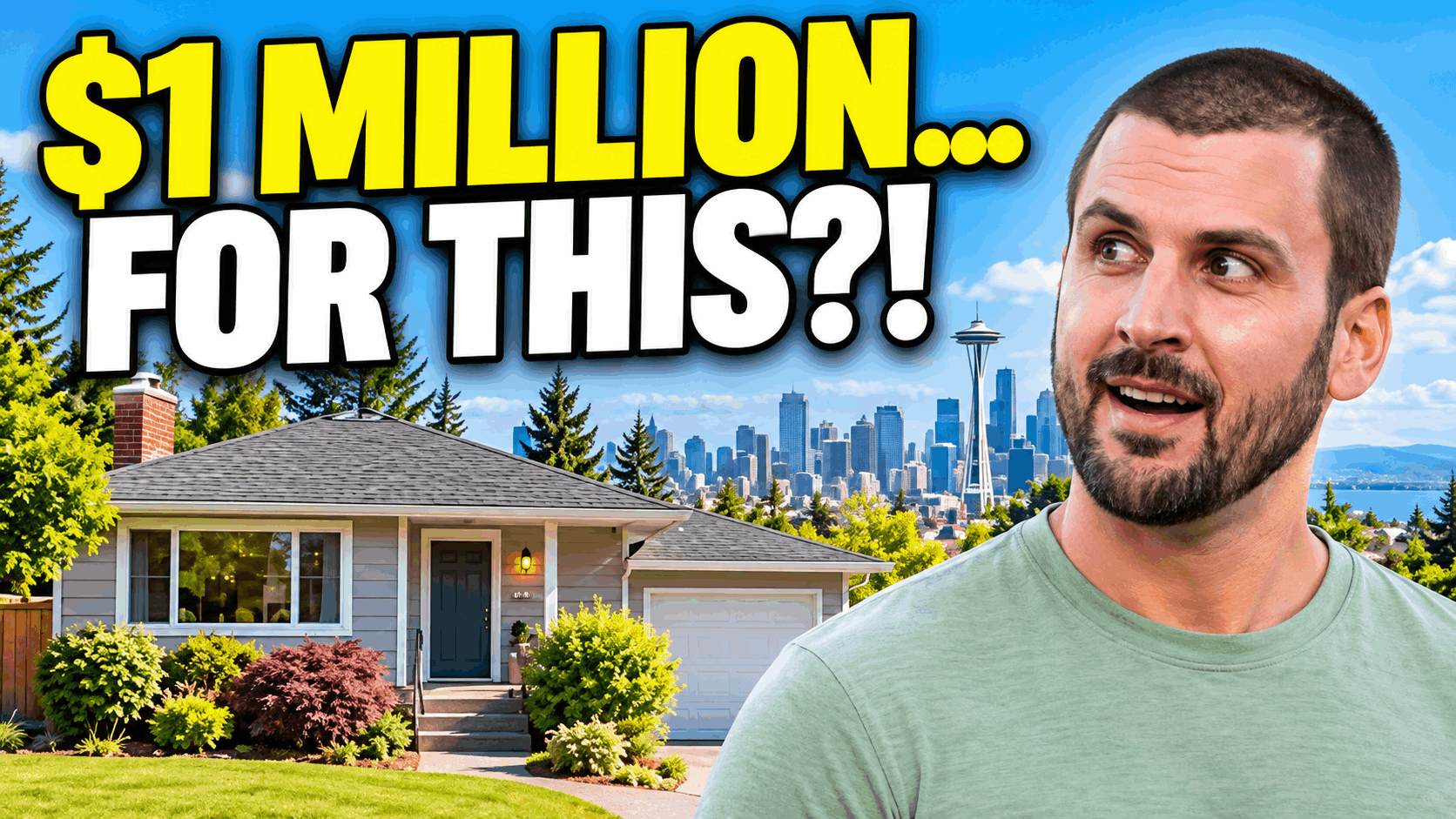
A fairly normal three-bedroom home can easily approach $1 million, and prices can climb considerably higher in Eastside cities like Bellevue, Kirkland, and Redmond.
It’s easy to point to the tech industry as the reason, and high-paying tech jobs are certainly part of the equation. But Seattle’s housing costs are really the result of several factors working together.
Limited land, strong employment, restrictive development patterns, a shortage of housing, expensive construction, and years of intense buyer demand have all contributed to the cost of owning a home in the Seattle area.
And while Washington is changing zoning laws to encourage more housing, those changes aren’t likely to make Seattle inexpensive overnight.
Here’s what’s really driving Seattle-area home prices—and what buyers can do about it.
1. Seattle Has a Limited Supply of Land
One of the biggest reasons housing is expensive in Seattle is simple geography.
Seattle sits on a relatively narrow strip of land between Puget Sound and Lake Washington. Cross Lake Washington and you reach major Eastside cities like Bellevue, Kirkland, and Redmond. Continue east and you encounter Lake Sammamish and eventually the Cascade foothills.
Unlike metropolitan areas such as Dallas, Phoenix, or Las Vegas, the Seattle region can't simply continue expanding outward in every direction across large amounts of inexpensive, flat land.
The region can grow north, south, and east, but moving farther from Seattle and the Eastside often means longer commutes to the area's major employment centers.
That's one reason buyers can typically get more home for their money in places like Lynnwood, Marysville, Renton, Auburn, or farther into Pierce County.
But geography isn't the only limitation.
Not All Available Land Can Be Developed
Even when a property has plenty of land, that doesn't necessarily mean all of it can be built on.
Development can be affected by:
-
Setback requirements
-
Lot-coverage limits
-
Height restrictions
-
Protected trees
-
Wetlands and critical areas
-
Steep slopes
-
Utility easements
-
Parking requirements
-
Access requirements
A lot that appears large enough for another home may have a much smaller usable building area once these restrictions are considered.
Builders also have to work through permitting, engineering, utility requirements, studies, plan corrections, and other approvals before construction begins.
Many of these regulations serve important purposes, including safety and environmental protection. But collectively, they make it slower and more expensive to add housing.
That means Seattle doesn't just have limited land. It also has limits on how much housing can be built on that land.
2. High-Paying Jobs Create Strong Housing Demand
Seattle also has something many expensive housing markets share: a concentration of high-paying jobs.
The region is home to major employers across technology, aerospace, healthcare, biotech, and other industries.
Amazon has a significant presence in Seattle and Bellevue. Microsoft is headquartered in Redmond, while companies such as Google and Meta employ thousands of people throughout the region.
The area's aerospace and space industries also play an important role, with Boeing, Blue Origin, SpaceX's Starlink operation, and other companies employing workers throughout the Puget Sound region.
When people relocate to Seattle for jobs paying well into six figures, many have substantial purchasing power.
When enough high-income households compete for a relatively limited number of homes, prices rise.
Why the Eastside Is Particularly Expensive
This helps explain why places like Bellevue, Kirkland, and Redmond command such high home prices.
Buyers aren't only purchasing a house. They're also paying for proximity to some of the region's largest employment centers.
Even with remote and hybrid work, location continues to matter. Many employees still commute several days per week, and buyers often want reasonable access to employment, restaurants, schools, airports, recreation, and other amenities.
High demand also creates a ripple effect.
When buyers are priced out of Bellevue or Kirkland, they may expand their searches into Issaquah, Bothell, Kenmore, Renton, or other nearby communities.
As demand spreads outward, prices can rise in those markets too.
3. Seattle Hasn't Built Enough Housing
Strong demand doesn't automatically make a region unaffordable.
The problem occurs when housing supply doesn't keep pace with demand.
For decades, many Seattle-area neighborhoods were primarily zoned for one detached house per residential lot.
As the population and employment base grew, large portions of Seattle and the Eastside couldn't easily add duplexes, townhomes, small multifamily buildings, or backyard homes.
Much of the new housing was instead concentrated around downtown areas, major roads, and transit corridors.
The result was a basic supply-and-demand imbalance: more households competing for a limited number of homes in the places where they most wanted to live.
4. Washington Is Changing Its Housing Laws
Washington has begun making significant changes intended to increase housing supply.
State legislation has expanded opportunities for accessory dwelling units, commonly known as ADUs, and detached accessory dwelling units, or DADUs.
Depending on the property and local regulations, homeowners may be able to add one or potentially two additional housing units to a residential property.
That could mean an attached ADU, a detached backyard home, or other configurations permitted under local rules.
These homes can provide rental income, housing for aging parents or adult children, or simply increase the overall housing supply without requiring an entirely new subdivision.
Washington has also expanded what's commonly called middle housing.
Depending on the city, property, and proximity to transit, that can include:
-
Duplexes
-
Triplexes
-
Fourplexes
-
Townhomes
-
Cottage housing
-
Other small multifamily options
These changes could gradually increase the number and variety of homes available throughout the Seattle area.
But zoning reform doesn't automatically create affordable housing.
The property still has to work physically, utilities and access need to be available, and someone still has to pay to build the home.
And that's where Seattle has another major problem.
5. It's Extremely Expensive to Build a Home in Seattle
Before a builder pours a foundation, they first have to acquire the land.
In Seattle, Bellevue, Kirkland, Redmond, and other desirable locations, the underlying land alone can be worth hundreds of thousands—or even millions—of dollars.
Then comes site preparation.
Depending on the property, that could involve demolition, grading, drainage improvements, tree removal, retaining walls, environmental studies, and upgrades to water, sewer, or electrical service.
After that, you still have:
-
Architectural plans
-
Engineering
-
Surveys
-
Permitting fees
-
Utility charges
-
Insurance
-
Labor
-
Building materials
-
Modern energy-code requirements
-
Financing and carrying costs
Time itself also costs money.
A builder may own a property for months or longer while paying interest, property taxes, insurance, and other expenses before the finished home can be sold.
There is also substantial financial risk. Mortgage rates can increase, buyer demand can change, material costs can rise, and unexpected site conditions can add tens of thousands of dollars to a project.
Why Builders Don't Just Build More Starter Homes
This helps explain why much of Seattle's new construction is relatively expensive.
If acquiring the land and completing the project already costs a significant amount of money, building an inexpensive starter home may not be financially viable.
A builder may need to construct a larger or more expensive home simply to cover the cost of the project and make the development worthwhile.
That's why increasing housing supply is important, but it doesn't automatically mean the new housing will be inexpensive.
6. Why Higher Mortgage Rates Haven't Crashed Seattle Home Prices
Mortgage rates have dramatically changed affordability.
A buyer purchasing the same home today can have a substantially higher monthly payment than someone who bought when mortgage rates were historically low.
Normally, you'd expect that reduction in purchasing power to put significant downward pressure on home prices.
But higher rates also discouraged homeowners from selling.
Many Seattle-area homeowners purchased or refinanced their homes at extremely low mortgage rates. Selling their current house could mean replacing that mortgage with one at a much higher rate.
For some homeowners, moving to a similarly priced house could result in a significantly higher monthly payment without providing much of an upgrade.
Unless they had a compelling reason to move, many simply stayed put.
This became known as the mortgage-rate lock-in effect.
7. Seattle's Housing Market Is Becoming More Balanced
That lock-in effect has started to loosen.
Some homeowners have spent years waiting for rates to fall and are reaching a point where they don't want to delay their plans anymore.
Families need more space. Empty nesters want to downsize. People relocate for work, go through life changes, or simply decide they're ready to move.
At the same time, homes have generally been taking longer to sell than during the extremely competitive market of a few years ago.
As listings remain available longer, inventory accumulates.
For buyers, that can create opportunities that were difficult to find when nearly every desirable home attracted multiple offers.
Depending on the property, buyers may have more opportunity to negotiate:
-
Purchase price
-
Seller-paid closing costs
-
Interest-rate buydowns
-
Repairs
-
Inspection contingencies
-
Other contract terms
That doesn't mean every Seattle-area neighborhood is suddenly a buyer's market.
Updated homes in highly desirable Seattle and Eastside locations can still attract strong interest, while overpriced homes, condos, or properties with condition and location issues may sit much longer.
The market has become more divided, which makes pricing and negotiation strategy increasingly important.
8. Could Seattle Home Prices Actually Come Down?
Yes. Home prices can decline.
If inventory continues increasing while buyer demand weakens, prices could experience additional downward pressure.
A weaker economy, significant job losses, higher unemployment, or major changes among the region's largest employers could also affect housing demand.
But there's an important distinction between home prices and housing affordability.
Affordability ultimately comes down to the monthly payment.
A home's price could fall while mortgage rates remain elevated, leaving the monthly payment relatively expensive.
Alternatively, prices could remain fairly stable while lower mortgage rates, rising household incomes, or seller incentives improve affordability.
That's why buyers shouldn't look exclusively at the listing price when determining whether the market is becoming more affordable.
9. Will Building More Homes Make Seattle Affordable?
More housing should help.
Washington's ADU and middle-housing reforms could gradually increase supply in neighborhoods where historically only one detached house could be built per lot.
Over time, that could create more options for buyers and renters at different price points.
But the transition will take time.
Seattle still has expensive land, high construction costs, infrastructure limitations, development regulations, and strong long-term housing demand.
The region also continues to offer many of the characteristics that have historically supported home values: high-paying jobs, major employers, access to outdoor recreation, and a limited supply of land near major employment centers.
For those reasons, I don't expect Seattle, Bellevue, Kirkland, or Redmond to suddenly become inexpensive places to buy a home.
Instead, affordability may improve through a broader variety of housing—townhomes, condos, DADUs, duplexes, cottage homes, and smaller properties—rather than through a dramatic collapse in detached-home values.
10. What Can Seattle Homebuyers Actually Do?
If you're considering buying a home in the Seattle area, start by determining which parts of your search are truly nonnegotiable.
Most buyers are balancing four things:
Price, location, commute, and the size or type of home.
Even buyers with strong budgets usually have to make some tradeoffs.
If Bellevue, Kirkland, or Seattle is your priority, first determine what your budget actually buys there.
Depending on your price range, that could mean a detached home, townhome, condo, new construction, or an older property that needs updating.
If you're not finding the space or condition you want, expanding your geographic search can make a substantial difference.
Places like Kenmore, Bothell, Issaquah, Lynnwood, Renton, and North Bend offer different combinations of commute, location, home size, and price.
The goal isn't necessarily to find the cheapest city. It's to determine which location gives you the best combination of the things that matter to you.
Consider Homes That Need Cosmetic Updates
Another strategy is looking beyond completely remodeled homes.
Move-in-ready properties tend to attract the most buyers and often command a premium.
If you're comfortable replacing flooring, painting, updating countertops, or remodeling bathrooms over time, you may be able to buy in a better location without paying for someone else's renovation.
Look for ADU or DADU Potential
Properties with an existing ADU—or the potential to add a DADU—can also be worth considering.
An additional unit could potentially generate rental income or provide space for family members, guests, or a home office.
Just make sure development potential is verified before purchasing.
A large lot doesn't automatically mean you can build another home.
Negotiate More Than Just the Purchase Price
Buyers should also consider the entire financial structure of the transaction.
Depending on the seller and property, you may be able to negotiate seller-paid closing costs, an interest-rate buydown, repairs, or a lower purchase price.
Sometimes the best opportunity isn't the cheapest home on the market.
It may be a property that's been listed for several weeks, needs cosmetic work, or has a motivated seller willing to negotiate.
Is Seattle Still Worth Buying a Home In?
That depends entirely on your situation.
Seattle remains an expensive housing market, and there is no single strategy that makes sense for every buyer.
But buyers often have more options than they initially realize.
The key is understanding what your budget buys in different locations, identifying which tradeoffs you're willing to make, and recognizing where there may be opportunities to negotiate.
I wouldn't build an entire buying strategy around waiting for a major Seattle housing crash.
A significant decline is always possible, but a severe housing downturn would likely accompany broader economic problems—which could also affect employment, income, mortgage qualification, and buyer confidence.
Instead, focus on the things you can control: your budget, monthly payment, property type, location, and timeline.
Frequently Asked Questions About Seattle Housing Prices
Why are houses in Seattle so expensive?
Seattle housing is expensive because of a combination of limited land, strong demand from high-paying employment, years of insufficient housing construction, development restrictions, and high land and construction costs.
Is Seattle more expensive because of the tech industry?
The tech industry is an important factor, but it isn't the only reason. High-paying jobs increase buyer purchasing power and housing demand, while Seattle's limited supply of homes makes it difficult for supply to keep pace.
Why is Bellevue so expensive?
Bellevue combines proximity to major employers, desirable neighborhoods, amenities, schools, and a relatively limited supply of housing. Its location near major Eastside employment centers creates particularly strong housing demand.
Are Seattle home prices going to crash?
No one can reliably predict a housing crash. Seattle home prices could decline if inventory rises substantially and buyer demand weakens, particularly during an economic downturn. However, the region's limited land, high construction costs, and employment base continue to support long-term housing demand.
Is Seattle becoming a buyer's market?
Conditions vary significantly by neighborhood, price range, and property type. Buyers generally have more choices and negotiating opportunities than they did during the extremely competitive market several years ago, but desirable and well-priced homes can still receive significant interest.
Will Washington's new zoning laws lower home prices?
Allowing ADUs, DADUs, duplexes, townhomes, and other middle housing should increase housing supply over time. However, high land and construction costs mean zoning reform alone is unlikely to make Seattle housing inexpensive.
Where can I find more affordable homes near Seattle?
Buyers who expand beyond Seattle, Bellevue, Kirkland, and Redmond may find more purchasing power in areas such as Renton, Bothell, Kenmore, Lynnwood, North Bend, Auburn, and other communities farther from the region's primary employment centers.
The Bottom Line
Seattle housing isn't expensive because of one company, one policy, or one group of buyers.
It's the combination of limited land, development restrictions, expensive construction, high-paying jobs, strong housing demand, and decades of not building enough homes to keep pace with growth.
Washington is now making it easier to add ADUs, DADUs, duplexes, townhomes, and other forms of middle housing. Those changes should gradually create more options, but they probably won't make Seattle inexpensive overnight.
For buyers, the current market may offer something we haven't seen as consistently in recent years: choice and negotiating power.
If you're thinking about moving to Seattle or the Eastside and want to figure out where your budget will go the furthest, I'm Jon Hodgson with John L. Scott. I was born and raised in the Seattle area and help buyers relocate here every week.
We can compare neighborhoods, commute times, housing options, and monthly payments to figure out which areas make the most sense for you.
📱 Call or Text: (425) 449-0442
📨 Email: jonhodgson@johnlscott.com
📅 Schedule a Zoom call: https://calendly.com/hodgsonhomesrealestate
🏡 Search Seattle-area homes: https://www.hodgsonhomesgroup.com/
Categories
Recent Posts