Is Bellevue Worth the Money? Living in Bellevue, WA in 2026
By Jon Hodgson, Hodgson Homes - John L. Scott | Last updated November 2026
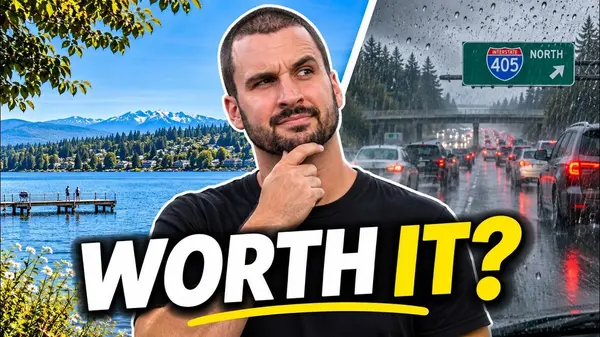
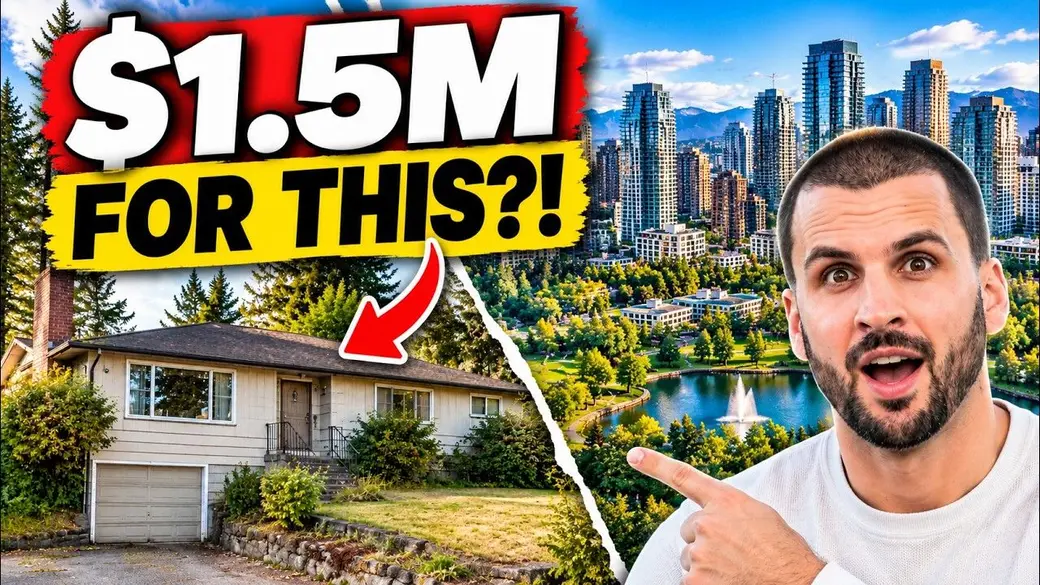
Short answer: Bellevue is worth the money if location matters more to you than getting the most house for your budget. You're central to the Eastside, about 10 to 15 miles from Downtown Seattle, with a real downtown, Lake Washington and plenty of parks close by. The trade-off is price: $1.5 million in Bellevue often buys an older home, and the same budget can buy a newer or larger home a few miles away.
If you're moving to the Seattle area, Bellevue probably keeps coming up in your search. It sits in the middle of Seattle's Eastside, it's close to some of the region's biggest employers, and Seattle is just across the lake. But Bellevue is expensive, and it isn't one place. Downtown Bellevue, Somerset, Crossroads, Newport Hills and Bridle Trails are all Bellevue, and they can feel completely different from each other.
I was born and raised here, and now I'm raising my own family here. Here's what living in Bellevue actually looks like in 2026: what homes cost, the different areas, getting around, schools, the downsides, and three areas relocation buyers tend to overlook.
Prefer to watch? Here's the video version:
Bellevue in 60 seconds
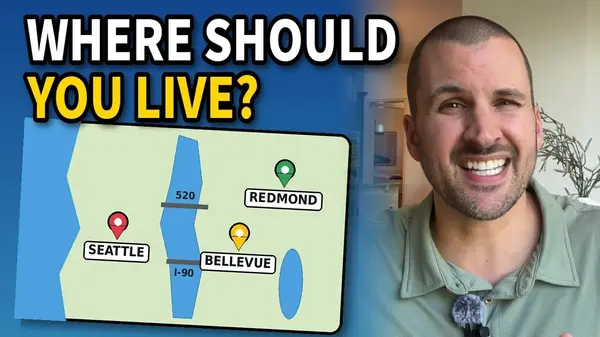
Bellevue sits directly east of Seattle on the other side of Lake Washington. Depending on where you are in the city, you're roughly 10 to 15 miles from Downtown Seattle, with two main ways across the lake: I-90 to the south and SR 520 to the north.
Kirkland is directly north, Redmond is to the northeast, Issaquah is to the southeast, and Seattle is across the lake. If you work in Bellevue, Redmond, Seattle or anywhere around the Eastside, that central location is a big part of the appeal.
Bellevue is also bigger and more varied than most people expect. Downtown has high-rises, Bellevue Square, restaurants, offices and a lot of newer development. Drive 10 or 15 minutes out and you can be on a quiet street with older homes, big trees, parks, trails and, in some areas, large lots.
What does it cost to buy a home in Bellevue?
There's no way around it: Bellevue is expensive. The median sale price in Bellevue was $1.9 million in September 2026 (NWMLS), meaning half of homes sold for more and half for less. But the median doesn't tell you much on its own, because what a given budget buys depends on the type of home and the part of Bellevue.
| Budget | What you'll usually see | Typical compromise |
|---|---|---|
| Under $1 million | Mostly condos and townhomes | The occasional single-family home is usually smaller, older or needs significant work |
| $1 million to $1.5 million | Some older single-family homes, especially farther from Downtown | Size, condition, lot size or location |
| $1.5 million to $2 million | More traditional 3 and 4-bedroom homes and more neighborhoods to choose from | Many homes are from the 1960s to 1990s; condition varies a lot |
| Over $2 million | Larger remodeled homes, newer construction and more locations | West Bellevue and areas near Downtown can run $3 million to $5 million and up |
Price ranges are approximate and change often. Check current listings before you make decisions.
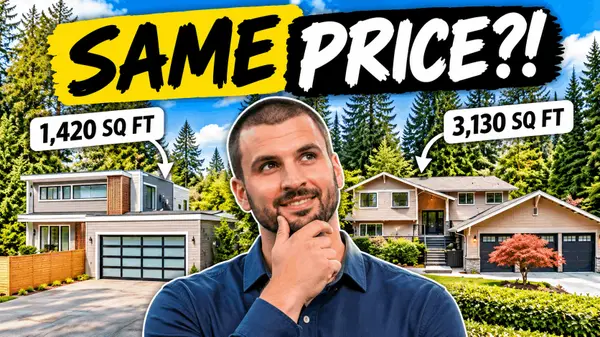
One thing that surprises people relocating here: $1.5 million doesn't let you pick any part of Bellevue you want. Much of the city was built out decades ago, so even at that price, don't expect a brand-new 3,500-square-foot house. Some older homes have been completely remodeled and some haven't been touched in 30 years, and that makes a huge difference in price.
That's why, when someone tells me "I want to live in Bellevue and my budget is $1.5 million," my next question is: what are you actually looking for? Close to Downtown, a bigger yard, fully remodeled, or an older home you're willing to update? Each of those points you to a different part of Bellevue.
The different areas of Bellevue
| Area | Housing | Feel |
|---|---|---|
| Downtown Bellevue | Mostly condos, including newer luxury buildings | The most city-like; walk to restaurants, shopping and parks |
| West Bellevue (Meydenbauer, Enatai) | Single-family neighborhoods | Central, close to Lake Washington and Seattle; among the highest prices in the city |
| Somerset | Many homes from the 1960s to 1980s | Hillside neighborhood; some homes have big views |
| Newport Hills | Older single-family homes | Established neighborhoods, mature trees, near I-90 and I-405 |
| Crossroads | Condos, townhomes and single-family homes | Everyday shopping and groceries close by |
| Bridle Trails | Larger lots, some equestrian properties | Wooded, almost rural in spots, a few miles from Downtown |
Downtown Bellevue
If you want the most city-like lifestyle Bellevue has, this is it: high-rise condos, restaurants, coffee shops, Bellevue Square, Lincoln Square, offices and parks, with a lot you can reach on foot. Housing leans heavily toward condos, and some of the newer luxury buildings get very expensive.
West Bellevue
Just west of Downtown, areas like Meydenbauer and Enatai give you a central location with traditional single-family neighborhoods. You're close to Downtown, close to Lake Washington and have easy access to Seattle, and you'll pay for that location.
Somerset
Head south and southeast and Bellevue feels very different. Somerset sits up on the hill, so some homes have impressive views, and it has an established suburban feel. Many homes were built in the 1960s, 70s and 80s, so you'll see a wide range from fully remodeled to original finishes.
Newport Hills
Farther south, Newport Hills is much more suburban than Downtown, with established neighborhoods, mature trees and a lot of older single-family homes.
Crossroads
On the east side of Bellevue, Crossroads has shopping, restaurants and groceries at Crossroads Bellevue, with a mix of condos, townhomes and single-family neighborhoods around it.
Bridle Trails
Up toward the Kirkland side, Bridle Trails may be the best example of how different two parts of the same city can be. You'll find larger lots, lots of trees and even equestrian properties. Some spots feel rural and wooded, even though you're only a few miles from Downtown Bellevue.
Bellevue isn't one lifestyle. You can live in a high-rise and walk to dinner, live on a quiet street under mature trees, have a view in Somerset, or have a wooded property near Bridle Trails. When I help someone relocate here, I start with what they want their day-to-day life to look like, then narrow down which parts of Bellevue fit.
Daily life in Bellevue
There's a lot to do, especially around Downtown. Downtown Park sits right in the middle of everything, with a big open lawn, a walking loop and a playground. It's one of my favorite spots in Bellevue. A few blocks away, Meydenbauer Bay Park puts you right on Lake Washington, with a beach and water access, and you can walk back up into Downtown afterward.
That's what's unusual about Bellevue: you can be surrounded by high-rises, restaurants and shopping, and a few minutes later be sitting by the lake. Bellevue Square and Lincoln Square put restaurants, shopping and a movie theater in a small area.
KidsQuest Children's Museum is also Downtown. My boys love it, and it's a great option on a rainy winter day.
Beyond Downtown there are trails and parks across the city, and the mountains are close enough for a day of skiing or hiking. You don't have to live Downtown to enjoy any of this. Many Bellevue neighborhoods are about 10 to 15 minutes away, so you can come home to a quieter street and still be close to everything.
Commuting and getting around
Location is one of Bellevue's biggest advantages. If you work in Downtown Bellevue, your commute can be easy, and the city sits in the middle of many of the Eastside's major employment centers.
- To Seattle: I-90 makes the most sense from south Bellevue, and SR 520 from north Bellevue.
- Around the Eastside: I-405 runs north and south right through Bellevue.
- Light rail: Light rail now runs through Bellevue and connects to the regional system, which gives you an option besides driving. Check Sound Transit for current routes and schedules.
The downside is traffic. I-405 can back up badly at rush hour, and bridge traffic can add a lot of time to a Seattle commute depending on when you drive. A 10-mile commute here can look completely different depending on the freeway and the time of day. That's why, when someone relocates for work, I want to know where they'll be working before we narrow down neighborhoods. For more on this, see the questions to answer before buying a home in Seattle.
Schools
Most of Bellevue is served by the Bellevue School District, and depending on where you look, you'll see high schools like Bellevue, Newport, Interlake and Sammamish. There are also private school options throughout Bellevue and the Eastside.
For test scores, graduation rates, programs and ratings, look at sources like the OSPI Washington State Report Card and GreatSchools, and do your own research. What matters in a school is different for every household.
Where I can help is figuring out which homes are assigned to which schools. Boundaries here don't always follow neighborhood names, and two homes fairly close together can feed into different schools. If a particular school or program matters to you, confirm the boundary for the specific address with the district before you make an offer.
The downsides of living in Bellevue
Bellevue looks great on paper, but that doesn't automatically mean it's worth spending the extra money. Here's what to weigh.
- Cost. You pay a premium to live here. $1.5 million can still buy a 50 or 60-year-old house that needs updating. If you're coming from another expensive market, that may not surprise you. If you're coming from somewhere $1.5 million buys a newer 4,000-square-foot house on a big lot, Bellevue can be a reality check. The same budget a little farther out may get you a newer home, more space or a bigger lot.
- Traffic. The central location is a huge advantage, but I-405 through the middle of the city can be brutal at certain times of day.
- Lot size. Some Bellevue neighborhoods have good-sized lots, but if you want a newer, large house on a big piece of land, Bellevue isn't where I'd start unless your budget is substantial.
- Growth. Downtown keeps getting bigger and parts of Bellevue feel much busier than they used to. Some people love the restaurants, shopping and jobs that come with that. If you want something quieter and more suburban, other parts of the Eastside may fit better.
For a look at those costs beyond the price tag, see the hidden costs of buying a home in Seattle.
Is Bellevue worth it for you?
I wouldn't tell anyone to live in Bellevue just because they can afford it. It's worth the premium when these matter most to you:
- Location and convenience. You work in Bellevue or elsewhere on the Eastside and want to be central, with Seattle across the lake and restaurants and shopping close by.
- A middle ground. You don't want to live in Seattle, but you don't want to feel far from a city either. You can live Downtown and walk to coffee, or 10 minutes away with a yard.
- Location over size. You're willing to give up some house or yard for a shorter commute and more nearby.
If your top goal is the biggest, newest house you can get for your budget, I'll show you Bellevue and other parts of the Eastside side by side. Sometimes Bellevue is exactly the right fit, and sometimes we realize quickly that another area fits better. To compare, see Bellevue vs. Kirkland and where to live on the Eastside at every budget.
Weighing Bellevue against the rest of the area? See the pros and cons of living on Seattle’s Eastside, or if you’re relocating for a job, where to live by employer.
3 Bellevue areas relocation buyers often overlook
You don't have to spend $2 million to find a place you love in Bellevue. These three areas are worth a look before you draw a circle around Downtown and stop there.
1. Lake Hills
On the east side of Bellevue, Lake Hills often gets skipped because buyers focus on Downtown and the west side. Many homes were built in the 1950s and 60s, and you'll see everything from fairly original homes to complete remodels and newer homes that replaced older ones. It's a traditional residential neighborhood that's still close to everything in Bellevue.
2. Newport Hills
In south Bellevue, Newport Hills has an established feel, mature trees and plenty of older single-family homes. It's also well positioned for I-90 and I-405, which can matter a lot depending on your commute.
3. Crossroads
Crossroads has a good mix of condos, townhomes and single-family homes, with Crossroads Bellevue nearby for groceries, restaurants and everyday errands, and you're still not far from Downtown. It's also one of the more walkable Eastside neighborhoods.
Moving just a few miles can change the type of home you're looking at, the feel of the neighborhood and what you get for your budget. Try to see a few of these areas in person before you settle on one.
Frequently asked questions
How far is Bellevue from Seattle?
Roughly 10 to 15 miles from Downtown Seattle, depending on where you are in Bellevue. You cross Lake Washington on I-90 or SR 520, and drive time depends heavily on traffic.
Can you buy a house in Bellevue for under $1 million?
Occasionally, but under $1 million you'll mostly see condos and townhomes. Single-family homes at that price are usually smaller, older or need significant work.
What does $1.5 million buy in Bellevue?
Often an older single-family home, many built between the 1960s and 1990s. Condition and location vary a lot, so the same budget can look very different from one neighborhood to the next.
Which school district serves Bellevue?
Most of Bellevue is in the Bellevue School District. Boundaries don't always follow neighborhood names, so confirm the assigned schools for a specific address with the district.
Is there light rail in Bellevue?
Yes. Light rail runs through Bellevue and connects to the regional system. Check Sound Transit for current routes and schedules.
Thinking about a move to Bellevue?
Jon Hodgson leads Hodgson Homes - John L. Scott in Renton. He was born and raised in the Seattle area and has been licensed in Washington since 2012. He helps relocation buyers and sellers, first-time buyers, move-up buyers, downsizers, investors and developers across Seattle and the Eastside. See more about Bellevue homes and neighborhoods.
Whether you're moving next month or a year from now, it's never too early to make a plan. Call or text (425) 449-0442, email jonhodgson@johnlscott.com, or schedule a Zoom call.
Client Focused, Results Driven.
Hodgson Homes - John L. Scott | 4735 NE 4th St Ste 92603, Renton, WA 98059 | WA License #110447. Prices are approximate and change often.
Categories
Recent Posts