Living on Seattle’s Eastside: Pros & Cons Nobody Tells You

By Jon Hodgson, Hodgson Homes - John L. Scott | Last updated November 2026
Short answer: Living on Seattle's Eastside is worth it if you value outdoor access, a range of neighborhood styles, great summers and being close to major employers, and you're prepared for high home prices, traffic and gray winters. The biggest mistake isn't overspending on a house. It's choosing a location that doesn't fit your daily life.
Seattle's Eastside is expensive. But is it actually worth the money? I've lived in the Seattle area my entire life and have been helping people buy and sell homes here for nearly 15 years. There's a lot I love about the Eastside, and there are downsides people don't always see until they live here: expensive housing, frustrating traffic, months of gray skies, and big differences between communities that look similar online.
Here are the real pros and cons, so you can decide whether moving here makes sense for you.
Prefer to watch? Here's the video version:
Pros and cons at a glance
| Pros | Cons |
|---|---|
| Very different lifestyles, all close to Seattle | The cost of housing |
| Lakes, mountains and trails close by | Traffic and commutes |
| A wide variety of homes and neighborhoods | Long, gray winters |
| Summers that are hard to beat | Some areas can feel too suburban |
| Major employers on this side of the lake | Choosing the wrong location for your life |
What is Seattle's Eastside?
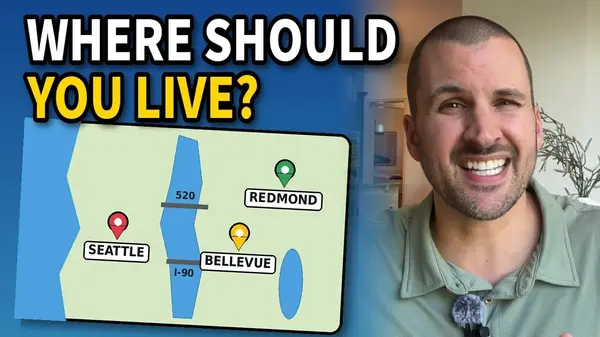
The Eastside is the area east of Lake Washington, across the water from Seattle. It includes Bellevue, Kirkland, Redmond, Issaquah, Sammamish and several other communities.
These places can feel very different. You can be in Downtown Bellevue surrounded by high-rises, restaurants and shopping, then drive 20 or 30 minutes east and be in wooded neighborhoods with larger properties and mountain views. Two homes both on "the Eastside" can mean two very different daily lives.
Pro #1: Very different lifestyles, all close to Seattle
One of the Eastside's biggest advantages is the range of lifestyles you can choose from while staying close to Seattle.
- Downtown Bellevue: I like to call it the bougie version of Downtown Seattle. It's more polished and everything feels a little newer, with high-end shopping at Bellevue Square and The Shops at The Bravern, plus restaurants, hotels, Lincoln Square, Downtown Park and Meydenbauer Bay.
- Downtown Kirkland: Waterfront restaurants, coffee shops, and a downtown where you can spend an afternoon walking along the lake.
- Sammamish and Issaquah: More residential, with wooded neighborhoods and outdoor recreation right nearby.
And Seattle is still just across the lake for a Seahawks game at Lumen Field, the Mariners at T-Mobile Park or the Kraken at Climate Pledge Arena. Hopefully the Sonics, too, someday.
Con #1: The cost of housing
It won't surprise anyone that the Eastside is expensive. What does surprise relocation buyers is how little house their money buys in certain areas. Buyers come to me with $1.5 million or $2 million budgets expecting a big home with a large backyard and newer finishes. Depending on where they're moving from, that's a reasonable expectation. But in West Bellevue or the pricier parts of Kirkland, that budget may mean an older home that needs updating, a smaller lot, or giving up features they wanted.
| City | Approximate median sale price |
|---|---|
| Bellevue | About $1.9 million |
| Sammamish | About $1.5 to $1.6 million |
| Kirkland | About $1.4 million |
| Redmond | About $1.4 million |
| Issaquah | About $1.4 million |
| Snoqualmie | About $1.1 to $1.2 million |
Source: NWMLS, September 2026. Medians cover all home types; you'll find homes well above and below these numbers.
Don't forget property taxes, insurance, maintenance and possibly HOA dues on top of the price (see the hidden costs of buying a home in Seattle).
The good news is that prices vary a lot. Look farther east toward Snoqualmie Ridge or North Bend, or consider a different type of home, and you may get more space or newer construction for your money. The trade-off is usually a longer commute, more distance from major employers, or less walkability.
It isn't about finding the cheapest home. It's about deciding which compromises you're comfortable with, because spending more doesn't automatically make you happier with where you live.
Con #2: Traffic and commutes
When you're looking at homes online, it's easy to underestimate how much traffic will affect your daily life. A house 10 or 15 miles from your office can turn into a 30, 45 or even 60-minute commute, depending on where you're going and when you leave.
- I-405 runs north and south through Bellevue and Kirkland, and at rush hour it can get bad.
- SR 520 and I-90 connect the Eastside to Seattle across Lake Washington. Both are convenient when traffic is moving, and a different experience at rush hour.
- Light rail now serves parts of the Eastside, which gives you another option depending on your route. Check Sound Transit for current service.
Traffic is hard to avoid anywhere in the Seattle area, but where you live, where you work and when you travel make a huge difference. Tell me where you'll work and what time you need to be there, and we can look at realistic commute ranges from different communities. Sometimes you'll be driving against the heaviest traffic, which makes a location more practical than you expected.
Don't just look at miles on a map. Even if you love your house, an extra hour in traffic every day wears on you. For more on choosing a location around your commute, see the questions to answer before buying a home in Seattle.
Pro #2: Access to the outdoors
This is one of my favorite things about living on the Eastside. Lakes, mountains, hiking, skiing, biking and boating are all a relatively short drive away.
- Lakes: Lake Washington runs along the western edge of the Eastside, and Lake Sammamish sits between Redmond, Sammamish and Issaquah. In summer there's boating, paddleboarding, kayaking and swimming at parks like Juanita Beach Park in Kirkland, Meydenbauer Bay Park in Bellevue and Lake Sammamish State Park in Issaquah, plus smaller spots like Chism Beach Park and Newcastle Beach Park in Bellevue.
- Mountains: Cougar, Squak and Tiger Mountains are right around Issaquah. One of my personal favorites is the hike up to Poo Poo Point, with big views and, in summer, paragliders launching off the mountain and floating down into the valley. More in my living in Issaquah guide.
- Skiing: Snoqualmie Pass is roughly an hour from much of the Eastside, depending on road conditions. You can ski in the morning and be home that afternoon.
- Everyday trails and parks: Even if you don't hike or ski, there's Marymoor Park, the Sammamish River Trail, Cougar Mountain Zoo and miles of trails throughout the area.
I think one of the coolest things about living here is working in a major employment center like Bellevue or Redmond and still having all of this so close.
Pro #3: A wide variety of homes and neighborhoods
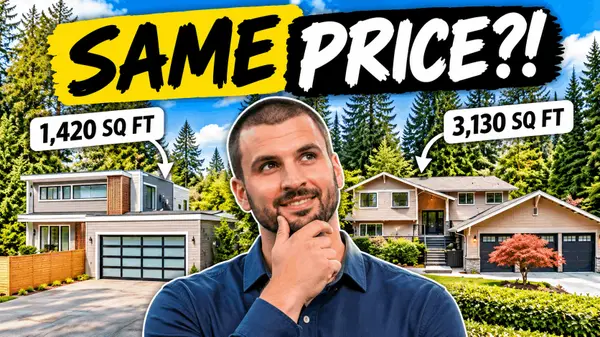
Housing is expensive, but not every home here is a $2 million house.
- High-rise condos and newer townhomes in Downtown Bellevue
- Older, established neighborhoods in Kirkland, Bellevue and Redmond, with mature trees and homes with more character
- Planned communities in Sammamish, Issaquah Highlands and Snoqualmie Ridge
- Larger properties and acreage around Woodinville, parts of Issaquah and farther east toward North Bend
Here are three real examples from buyers I've worked with:
- About $1 million, wanted a detached home: A million dollars doesn't give you a ton of detached options on the Eastside, but this buyer was flexible on location. We found a house in Issaquah on a large lot in a beautiful mountain setting.
- About $500,000, top priority was being on the Eastside: This buyer was willing to compromise on the type of home, and we found a two-bedroom condo in Issaquah.
- Just over $1.5 million, wanted mountain views and space: These buyers didn't mind a longer commute, so we expanded the search to Snoqualmie Ridge, and they bought a home of more than 4,000 square feet with mountain views. See my Snoqualmie Ridge guide.
Three budgets, three properties, three different priorities. You might start out sure you need to live in one city, and once you see what your money buys, another area makes more sense.
Con #3: The weather
Some of these pros and cons, like traffic, cost of living, outdoor access and especially the weather, apply to the whole Seattle area, not just the Eastside. But if you're relocating, they're still worth understanding.
I was born and raised here, so I'm used to it. But I understand why people moving from Arizona, California or Texas can have a harder time adjusting. It's not so much the amount of rain. It's going days, sometimes weeks, without much sunshine.
- From roughly November through March, expect a lot of gray skies, damp weather and short days.
- In December it can get dark around 4:15 in the afternoon, so on a typical 9-to-5 schedule you may leave for work and come home in the dark.
- It doesn't pour nonstop for six months. A lot of the rain is light drizzle or mist, though there are heavier storms.
- Lower areas like Bellevue, Kirkland and Redmond don't usually get much snow, but when it does snow, hills and icy roads can cause a lot of disruption.
Personally, I think the weather is a fair trade for everything else here. But if sunshine is a big part of your day-to-day life, take this one seriously.
Pro #4: The summers
After months of complaining about the weather, summer shows up and everyone remembers why they love living here. I'm biased, but I think our summers are some of the best in the country.
- From roughly late June through September, expect warm days, generally low humidity and a lot less rain than people expect, with temperatures often in the 70s and 80s.
- There are occasional heat waves, and wildfire smoke can be an issue some years, but summers are generally much milder than in Texas, Arizona or Florida.
- Around mid-June the sun doesn't set until after 9 PM, so you can finish work and still have hours of daylight for dinner outside, a walk or time at the lake.
The whole area feels different in summer: packed patios, busy waterfront parks, people out walking and biking, arts events in Bellevue, waterfront activities in Kirkland, and outdoor concerts and events around Redmond. Does that make up for several months of gray? That depends on who you ask. For me, it's one of the biggest reasons I love living here.
Con #4: Some areas can feel too suburban
For some people, a suburban setting is exactly the point. For others, it's an adjustment. Downtown Bellevue and Downtown Kirkland have restaurants, coffee shops and shopping within walking distance, but outside those downtowns things change quickly.
Sammamish, for example, has beautiful neighborhoods, parks and trails, but you'll probably drive for most daily errands, and the same is true in parts of Issaquah, Redmond, Bellevue and Kirkland. If you're coming from a big city where everything is outside your front door, some areas may feel quiet. (A few Eastside neighborhoods are more walkable than you'd expect; see 5 walkable Eastside neighborhoods.)
Nightlife is the other piece. Downtown Bellevue has good restaurants, bars and lounges, and Kirkland has a great waterfront dining scene, but you won't find Seattle's variety. With two little boys at home, I'm usually winding down by 9 or 10. If you go out a lot more than I do these days, you may find yourself heading into Seattle regularly for concerts and nightlife, and that's fine.
There's a big difference between a condo in Downtown Bellevue and a neighborhood in Sammamish where you drive 10 or 15 minutes to grab dinner. Think about where you'll eat, how you'll spend weekends and how much driving you're comfortable with. The area around the house matters as much as the house.
Pro #5: Major employers and job opportunities
People unfamiliar with the area are often surprised by how many major companies are on this side of Lake Washington. Microsoft is headquartered in Redmond, Amazon has a major presence in Downtown Bellevue, Google has offices in Kirkland, Meta has a presence in the area, T-Mobile is in Bellevue and Costco is headquartered in Issaquah, along with many smaller companies. It isn't only tech: healthcare, retail, construction and professional services all contribute to the local economy.
The Eastside has become a major employment center in its own right, and it's one of the main reasons people relocate here. If you work at Microsoft in Redmond, for example, living in Redmond, parts of Kirkland or Sammamish may make more sense than living on the other side of Seattle.
Living here doesn't guarantee a short commute, but having so many employers nearby gives you options. The trade-off: all that employment and housing demand is part of why real estate is so expensive, and tech layoffs or hiring slowdowns can affect the local housing market.
For where to live near each major employer, see Moving to Seattle for work, and for a closer look at Bellevue, read Is Bellevue worth the money?
Con #5: Choosing the wrong location
This is the biggest piece of advice I can give anyone moving to the Eastside: don't choose where you'll live based only on the house.
When you're relocating to an unfamiliar area, it's easy to find a house online with the perfect floor plan, a beautiful kitchen and a big backyard, and picture yourself there. What the listing photos don't show is your daily life. How long will it take to get to work? How close are the restaurants and activities you enjoy? How much driving are you comfortable with?
Take Bellevue and Snoqualmie Ridge. Your money may go much further in Snoqualmie Ridge, with a larger home and mountain views. But if you commute to Downtown Bellevue five days a week, that's a very different life than living a few miles from your office. The opposite can happen too: you buy a smaller home in Kirkland to be close to everything, then realize you'd have been happy with more space and a longer drive to restaurants. Neither choice is wrong. It depends on what matters to you.
Before we tour homes, I want to understand your normal week. Where do you work, and how often do you commute? What do you do on weekends? Do you want coffee shops within walking distance, or more space and privacy? Once we know that, we can narrow down the right areas, sometimes including one you hadn't considered.
Visit in person if you can. Drive through the neighborhoods, try the restaurants and coffee shops, and if you'll be commuting, make the drive at the time you'd actually travel. At Eastside prices, the last thing you want is to spend a million dollars or more on a house you love, then realize six months later you don't love where you're living.
Is living on the Eastside worth it?
It depends on what you're looking for. There's a reason so many people pay a premium to live here: outdoor recreation, beautiful summers, major employers and a wide variety of neighborhoods and lifestyles. But you'll pay for it, traffic can be frustrating, and the long gray winters take some getting used to.
I've lived here my whole life and I'm raising my own family here, so I love a lot about this area. But it isn't perfect, and a community that fits one person perfectly won't be right for everyone. That's why understanding the differences between these areas matters so much before you move. To see what your budget buys across the Eastside, read where to live on the Eastside at every budget, and for a city-by-city look, see Bellevue vs. Kirkland and Issaquah vs. Sammamish.
Frequently asked questions
What cities are on Seattle's Eastside?
The Eastside is the area east of Lake Washington, including Bellevue, Kirkland, Redmond, Issaquah, Sammamish, Newcastle, Bothell, Woodinville, Snoqualmie and North Bend, among others.
Is it cheaper to live on the Eastside or in Seattle?
It depends on the neighborhood and type of home. Many Eastside cities have higher median prices, but prices vary widely, and areas farther east like Snoqualmie Ridge and North Bend can offer more space for the money.
How bad is the weather on the Eastside?
From about November through March, expect lots of gray skies, light rain and short days, with darkness around 4:15 PM in December. Summers from late June through September are generally warm, dry and mild, with daylight past 9 PM in mid-June.
How far is skiing from the Eastside?
Snoqualmie Pass is roughly an hour from much of the Eastside, depending on road conditions.
What's the biggest mistake people make moving to the Eastside?
Choosing a home based only on the house instead of the location. Commute, nearby restaurants and activities, and how much you want to drive matter as much as the floor plan.
Thinking about a move to the Eastside?
Jon Hodgson leads Hodgson Homes - John L. Scott in Renton. He was born and raised in the Seattle area and has been licensed in Washington since 2012. He helps relocation buyers and sellers, first-time buyers, move-up buyers, downsizers, investors and developers across Seattle and the Eastside.
Whether you're moving next month or a year from now, let's talk through your budget, commute and what you're looking for. Call or text (425) 449-0442, email jonhodgson@johnlscott.com, or schedule a Zoom call.
Client Focused, Results Driven.
Hodgson Homes - John L. Scott | 4735 NE 4th St Ste 92603, Renton, WA 98059 | WA License #110447. Prices are approximate and change often.
Categories
Recent Posts